
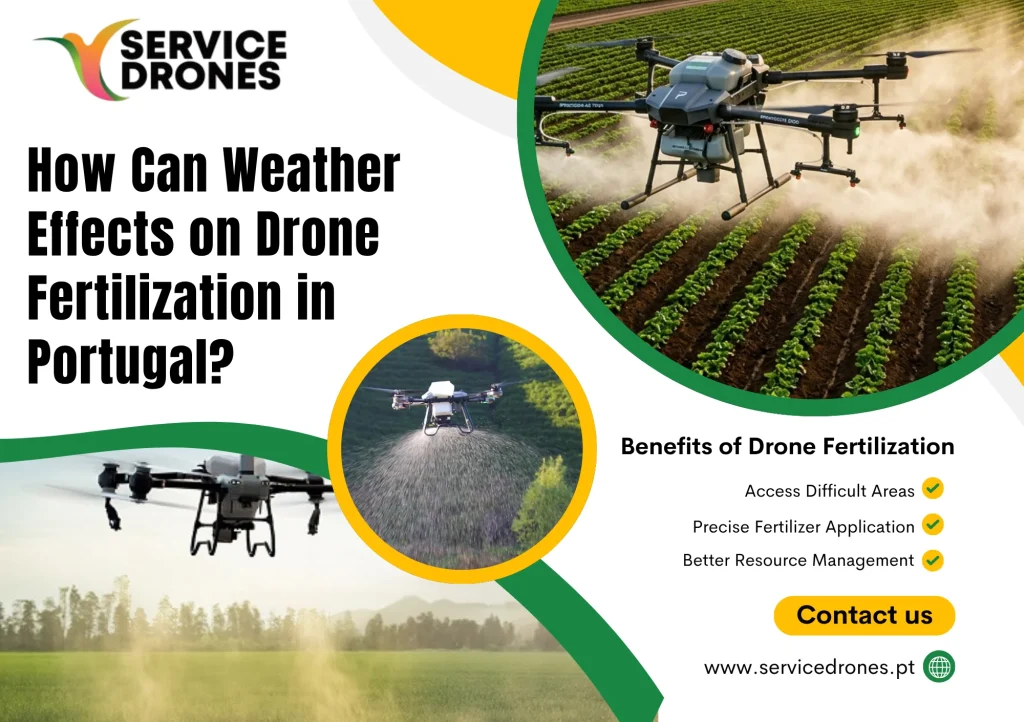

UAVs are revolutionizing the application of fertilizers and other agricultural products and treatments. By means of fertilization by drone, farmers are able to cover areas of difficulty in a proper and precise manner, and a substantial part of farm machinery is avoided. However, weather conditions play a very important role and affect, in a very substantial manner, the application by means of UAVs in an optimal manner and in terms of safety.
Understanding how different weather conditions like wind, rain, temperature and humidity affect the work of agricultural drones is key to improving the results of the applications that are made with the help of drones.
Service Drones offers specialized drone services for agriculture as well as for other markets and works professionally to offer the best services for its customers.
Why Does Weather Matters for Drone Fertilization?
Drone fertilization involves releasing fertilizer from a drone at a set height and application rate. Since drones operate above crops, understanding the weather effects on drone fertilization is essential for achieving accurate and efficient applications.
Weather conditions can affect:
- Application accuracy.
- Fertilizer distribution.
- Product Drift.
- Drone stability.
- Battery performance.
- Crop conditions.
- Overall treatment efficiency.
Therefore, professionals check the weather beforehand to start agricultural fertilization with drones in Portugal.
Weather Factors Affecting Drone Fertilization in Portugal
Numerous weather conditions can impact the performance of agricultural drones. These factors influence fertilizer distribution, flight stability, battery consumption, and overall application efficiency throughout the farm.
For this reason, it is essential for operators to evaluate several conditions before each fertilization task, and these are:
1. Wind Speed and Direction
Wind is one of the most important weather factors affecting the operation of drone fertilization. When there are strong or unpredictable winds, the fertilizers can be moved from the intended area of application, which can cause uneven distribution of fertilizers and even distribution of fertilizers to places other than the intended areas of application.
Light and stable wind is best for controlled operations of drones. Under these conditions, the professional operators can check wind speed and wind direction before the flight as well as during the flight and make changes to the operation if required.
Precision agriculture requires strict control of where the fertilizer is applied. Here, it must be ensured that no drift of fertilizer occurs, especially in areas close to roads, waterways, residential areas and neighboring agricultural fields.
2. Rain and Wet Conditions
Rain can have a large impact on the fertilization of crops. The fertilizers can be washed away before they can have any impact on the crops, depending on the time frame between application and heavy rain.
Some types of fertilizers will move in the wet conditions and in some cases can be incorporated into the soil while in other cases there can be enough movement to result in runoff and a decrease in application efficiency.
Professional drone operators consider the amount of rain currently falling and the forecast for the upcoming days while planning to apply fertilizers.
3. Temperature
Temperature affects crop conditions and drone operation.
Hot temperatures can place additional stress on a battery. In addition, plants will react differently to the various fertilizers when the environmental conditions change.
Choose a time of day that best fits your drone spraying in Portugal such as to succeed in hot dry periods. Early morning for example would be a good time for application as well as other times of day when conditions are favorable, rather than the hottest time of day.
4. Humidity
Humidity can also affect agricultural drone operations. Certain fertilizers may be affected by high humidity, especially those that are sensitive to moisture.
Each of these conditions should be considered together rather than individually. This is why a professional operator can evaluate the conditions and make a decision as to whether an application can take place or not and why an application may need to be rescheduled.
5. Weather and Drone Battery Performance
Weather can impact the treatment of crops in more ways than just distribution of fertilizer.
High temperatures can affect a drone’s battery, while cold weather can decrease battery’s efficiency. Windy weather increases the amount of power a drone needs to stay on course and to travel in a straight line.
Effective flight planning helps operators manage battery capacity, flight time, payload weight, and environmental conditions. Considering the weather effects on drone fertilization can further support efficient operations when treating large agricultural fields.
Choosing the Right Conditions for Drone Fertilization
Note that carrying out successful drone fertilization requires more than just flying around a field with a drone. Successful fertilizer spreading also requires good planning, the right equipment, correct setting of the application parameters and monitoring of the weather.
Factors to consider before application such as wind speed and direction, expected rainfall, temperature, humidity and crop condition as well as field characteristics.
Often waiting a few days and spraying when suitable rather than applying when only poor coverage can be obtained is better in the long run.
Why Choose Service Drones?
Agricultural drone operations require precise and professional planning when using a drone for work.
Service Drones is a provider of professional drone services in Portugal that supports companies and agricultural operators with the use of modern aerial technologies.
They provide a wide range of services and support its customers with different applications where aerial technologies increase efficiency, promote precision and allow access to locations that would otherwise be difficult to reach.
Agricultural fertilization can be executed by means of drone operations, in a very precise, controlled and targeted manner.
Final Thoughts
Weather plays a major role in effective drone fertilization. Wind, rain, temperature, humidity, and battery life can influence application accuracy and overall efficiency. Understanding the weather effects on drone fertilization helps farmers and operators choose suitable conditions for safer and more effective applications.
Therefore, monitoring weather conditions before each operation can improve application results. Choosing the right time for drone use can also support better coverage, reduce product loss, and improve overall efficiency.
Service Drones is here to support you with your drone-related needs and help you find the best solutions to implement in your daily work, whether in agriculture or other fields and operate nation-wide. Moreover, our professional drone solutions focus on precision, efficiency, and reliable results.