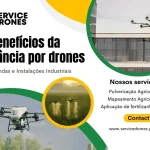


From farmlands to skyscrapers, drones are reshaping industries across Portugal. Farmers now use drones to increase yields, energy companies rely on them for solar panel cleaning, and infrastructure managers benefit from safer and more efficient inspections.
At Service Drones, we combine innovation with expertise to deliver cutting-edge aerial solutions that transform operations across multiple sectors.
In this blog, we’ll take an in-depth look at how drones are transforming agriculture, energy, infrastructure, and security in Portugal.
We’ll also discuss why these technologies matter for sustainability, how they support national economic goals, and why Service Drones is the trusted partner for aerial solutions.
The Rise of Drone Services in Portugal
The adoption of drone technology in Portugal is growing rapidly. With agriculture representing over 4% of the national GDP and renewable energy leading the EU transition, drones have become indispensable tools.
- According to EU data, precision agriculture can reduce pesticide use by up to 30%, lowering costs and protecting the environment.
- Solar panel efficiency drops by 20–25% if not cleaned regularly. Drone cleaning ensures energy output remains optimal.
- Infrastructure inspections using drones can cut operational risks by 40% compared to manual methods.
This shows why industries are turning to drones as smarter, safer, and more cost-effective solutions.
Why Portugal is Leading Drone Adoption?
Portugal is uniquely positioned to take advantage of drone technology:
- Large agricultural areas benefit from precision farming drones.
- Coastal weather conditions encourage renewable energy reliance, making drone cleaning of solar panels essential.
- Expanding cities increase demand for urban maintenance and inspections.
By integrating drones into these industries, Portugal is not only modernizing but also setting an example for sustainable practices across Europe.
How Drone Services Are Transforming Industries in Portugal
Drones are revolutionizing sectors like agriculture and solar energy in Portugal by improving efficiency, reducing costs, and promoting sustainable practices. Farmers and landowners benefit from better crop monitoring, precision data, and smarter land management.
1. Agricultural Spraying
Traditional spraying methods waste chemicals and expose workers to harmful substances.
Drone agricultural spraying ensures precise application, reducing waste by up to 90% while protecting soil health. This approach also limits chemical runoff, protecting rivers and groundwater.
2. Fertilizer Application
Uneven fertilizer distribution affects crop performance. Drones provide uniform coverage, improving nutrient absorption and crop growth. They also allow farmers to schedule fertilization based on real-time crop health data.
3. Drone Seeding and Mapping
Drone seeding speeds up planting, especially in difficult terrains, while mapping with multispectral cameras provides insights into crop health, enabling data-driven decision-making.
Benefits for Small and Large Farms
- Small farms can use drones to maximize productivity while keeping costs low.
- Large farms benefit from scalability, covering hundreds of hectares in hours instead of days.
Portugal is a leader in renewable energy, and drones are helping sustain that momentum.
4. Solar Panel Cleaning
Dust and dirt can drastically reduce solar efficiency. With drone-powered cleaning, companies maintain maximum efficiency while cutting labor and equipment costs.
Unlike manual cleaning, drones don’t require scaffolding, reducing downtime for solar farms.
5. Greenhouse Shading
Shading systems protect crops from excessive sunlight. Drones apply coatings or install shading more precisely, leading to better crop protection and energy savings.
Portugal aims to cover 80% of its electricity demand with renewables by 2030. Drone services play a direct role in supporting this target by maintaining solar panels, wind farms, and sustainable farming systems.
6. Infrastructure & Industrial Inspections
Maintaining urban and industrial structures can be dangerous and expensive. Drones make inspections and cleaning safer, faster, and more accurate.
7. Façade & Window Cleaning
Drones equipped with thermal and multispectral cameras can detect cracks, leaks, or structural weaknesses long before they become critical problems, saving companies significant repair costs.
They are used for:
- Bridges and highways.
- Industrial warehouses.
- Oil and gas facilities
8. Technical Inspections
Drones equipped with thermal and multispectral cameras can detect cracks, leaks, or structural weaknesses long before they become critical problems, saving companies significant repair costs.
They are used to:
- Bridges and highways.
- Industrial warehouses.
- Oil and gas facilities.
9. Safety and Compliance
Inspections with drones ensure compliance with European safety standards, reducing the need for risky manual inspections.
10. Security & Surveillance
Security is another growing application of drones. Drone surveillance in Portugal offers real-time monitoring for:
- Farms and livestock management.
- Construction sites and warehouses.
- Industrial facilities.
Compared to fixed cameras, drones provide mobility, wider coverage, and quick response capability.
Advantages Over Traditional Security
- Faster response time to threats.
- Cost-effective compared to hiring multiple security guards.
- Smarter analytics, when combined with AI-based monitoring tools.
Applications in Urban and Rural Areas
- In rural Portugal, drones protect farms from theft and monitor crops.
- In cities, they help with event monitoring, traffic control, and infrastructure surveillance.
Why Choose Service Drones?
Service Drones is more than a service provider – it’s a technology partner. What sets us apart:
- Certified multidisciplinary team ensuring compliance with EU regulations.
- Advanced fleet including the latest DJI Dock 3 technology.
- Proven track record: 1305 hectares sprayed, 2986 sqm cleaned, and 13+ projects completed.
Every project we deliver is guided by three principles:
- Precision – Using advanced sensors and AI to ensure accuracy.
- Safety – Protecting both workers and the environment.
- Sustainability – Reducing waste, emissions, and costs.
FAQ: Drone Services in Portugal
Q1. Are drone services legal in Portugal?
Yes. All operations comply with EU and Portuguese aviation safety regulations.
Q2. How much do drone services cost?
Prices depend on service type, land size, and complexity. For example, agricultural spraying is usually calculated per hectare.
Q3. Can drones operate in bad weather?
Drone operations depend on weather conditions. Most drones can handle light wind and moderate challenges, but operations are postponed during storms or heavy rain.
Q4. Do drones replace traditional methods completely?
Not entirely. Drones complement existing methods, making them faster, safer, and more efficient.
Q5. How secure is drone surveillance?
Drone surveillance uses encrypted data transmission, ensuring high levels of security and privacy compliance.
Q6. What sectors benefit most from drone services?
Agriculture, energy, infrastructure, and security all benefit significantly from drones.
Q7. How do drones contribute to sustainability?
By reducing chemical use, energy waste, and inspection risks, drones help industries lower their environmental footprint.
Conclusion: Building the Future with Drones
From farmlands to solar parks and skyscrapers, drone services are changing how industries operate in Portugal. They improve efficiency, reduce risks, and support sustainability goals.
Service Drones is at the forefront of this transformation, combining advanced equipment with expert teams to deliver results that matter.
Whether it’s helping farmers boost yields, ensuring solar panels perform at their best, or inspecting high-rise buildings safely, drones are the future.
At Service Drones, we fly higher so your results exceed expectations. And for those who want to explore the power of technology and AI beyond drones, your partner in digital transformation.